
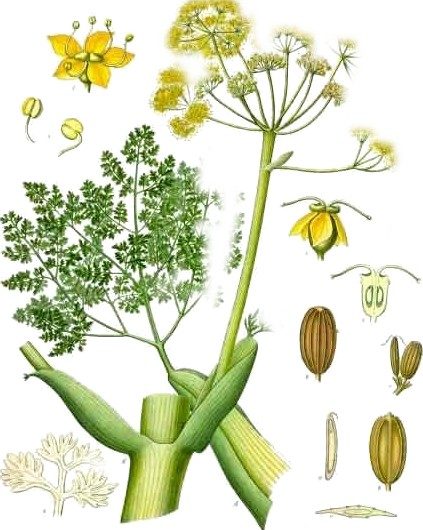
Galbanum
Galbano
- Known today as
- Gum resin of Ferula gummosa.
- Kind
- Resin & Wood, in 1 older authority
- Constituents
- beta-pinene and delta-3-carene, umbelliferone, galbanic acid, and 1 more
- Earliest authority here
- Exodus 30:34 (the Hebrew Bible and the New Testament)
- In other databases
- Plants of the World Online search · GBIF search · Wikidata search
- In the Canale glossary
- On the Manner of Discerning and Healing the Bewitched, Appendix A: Part Three, Chapters 7–8: The Bath and Fumigations
Revised October 1, 2026: Lore added from texts read in full. Version 1, first published September 25, 2026.
Galbanum: what did Canale use it for?
In the fumigation; an ingredient of Scripture’s incense in Treatise Two (ch. 8; Treatise Two; Exodus 30:34).
Galbanum: what does modern science say?
Green-smelling; used in perfumery.
Pharmacognosy & Toxicology
- Constituents
- beta-pinene and delta-3-carenethe green oil
- umbelliferone ChEMBL
- galbanic acid ChEMBLa sesquiterpene coumarin
- undecatrienethe green smell
- Mechanism
- A giant-fennel gum resin like asafoetida without the sulfur: carminative in the gut, counter-irritant on the skin in plasters, and a perfume note. In the fumigation it is smoke.
- Toxic dose
- Safe externally.
- Standing
- A perfumery material; in the Iranian pharmacopoeia; no European monograph.
- Sadraei, H., et al. (2001). “Spasmolytic activity of essential oil and various extracts of Ferula gummosa Boiss. on ileum contractions.” Phytomedicine 8. Matched to its record and reviewed
The abstract of each source, beneath its citation. For Club members. About the Club or sign in.
Constituent names open the compound’s record at PubChem, and “ChEMBL” beside a name opens its record at ChEMBL, the European Bioinformatics Institute’s database of bioactive molecules. Where a mechanism line was checked against ChEMBL (ChEMBL 37, read 1 October 2026), the check is shown with the measured value and its source paper, or says plainly that nothing has been measured. Doses are as the references give them, for description only; this is not medical advice. Each source carries the result of its check against Crossref, PubMed, or the authority’s page: see Verification.
What Medicine Makes of It
- The Wandering Womb and the ConvulsionsSuffocation of the mother, hysteria, and functional neurological disorder.
Galbanum: what lore surrounds it?
Thiselton-Dyer quotes Lucan's fires against serpents, “There foreign galbanum dissolving fries, And crackling flames from humble wallwort rise,” among the plants “burned for the purpose of expelling serpents.”
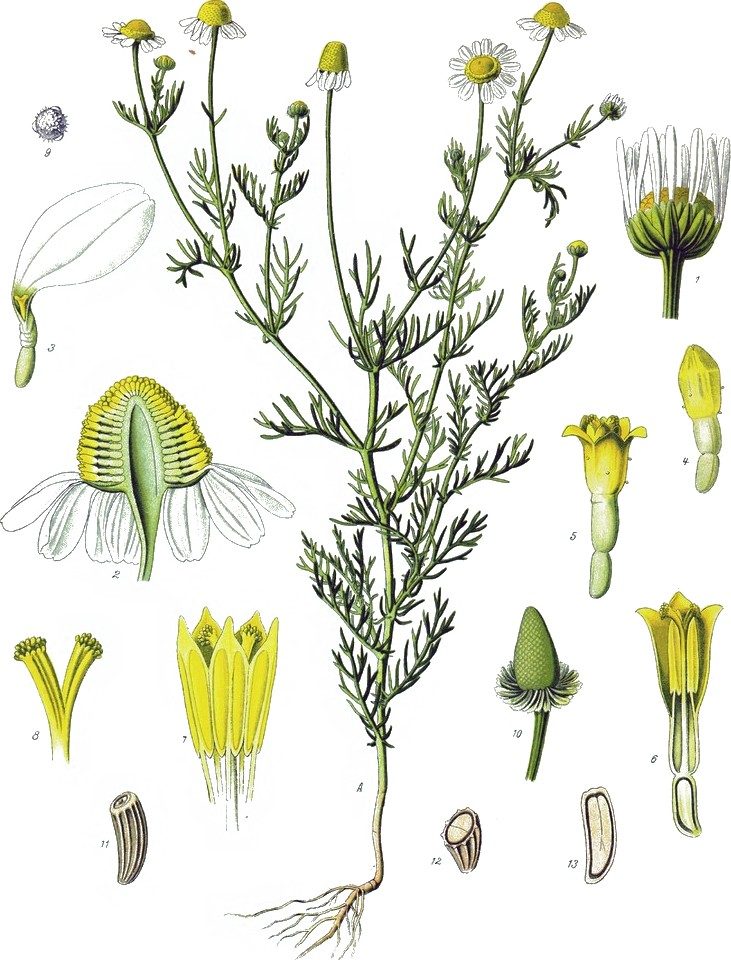
Grieve: the gum “was well known to the ancients and Pliny called it ‘bubonion,’” and under dry distillation it “yields a thick oil of a bluish colour, which after purification becomes the blue colour of the oil obtained from the flowers of Matricaria Chamomilla.”
Galbanum: what did the older authorities say?
- Exodus 30:34
- One of the four ingredients of the holy incense of the Tabernacle, with stacte, onycha, and frankincense (see Onycha and stacte).
Sources
- [19] Canton, M., et al. (2025). Chemical profiling of volatile and non-volatile fractions of galbanum (Ferula galbaniflua Boiss.) used in perfumery. Chemistry & Biodiversity 22(12): e01442. doi:10.1002/cbdv.202501442 Verified against its record · doi:10.1002/cbdv.202501442
- Thiselton-Dyer, T. F. (1889). The Folk-lore of Plants. Project Gutenberg #10118. Read in part · the text read
- Grieve, M. (1931). A Modern Herbal, “Galbanum.” botanical.com/botanical/mgmh/g/galban02.html Standard reference work
Verification
- Checked
- October 1, 2026
- Passes
- Every sentence read against its sources, in the pass over the remaining 343 entries
- The Standing line checked against the authority it names (EMA, WHO, FDA, CITES, Commission E)
- Every dated or regulatory claim checked by category across the database
- Each quotation from the older authorities checked word for word against the text, read in full
- Sources
- 4 cited: 1 read in part, 1 verified against its record, 1 matched to its record and reviewed, 1 standard reference work. 2 with the abstract on file.
- Corrections
- None were needed.
What was checked, how, and what was found is set out on the Verification page. A checked source is one whose record was found; it does not make the entry medical advice.
Cite This Entry
Version 1 · first published September 25, 2026 · last revised October 1, 2026
- Chicago
“Galbanum.” In Materia Medica, edited by B. C. P. Statema. Version 1. The Thinking Press, 2026–. Last modified October 1, 2026. https://thethinkingpress.org/materia-medica/galbanum.
- MLA
“Galbanum.” Materia Medica, edited by B. C. P. Statema, version 1, The Thinking Press, 1 Oct. 2026, thethinkingpress.org/materia-medica/galbanum. Accessed 8 Oct. 2026.
- APA
Galbanum. (2026, October 1). In B. C. P. Statema (Ed.), Materia medica (Version 1). The Thinking Press. Retrieved October 8, 2026, from https://thethinkingpress.org/materia-medica/galbanum
Club members keep entries on a shelf with private notes, print the plates as cards, and receive an entry by email each week. Create a free account before January 1, 2027 and all of it is yours for good. About the Club
See Also
Sharing galbanic acid
Also in Scripture
Hyssop in Scripture · Frankincense in Scripture · Mandrake in Scripture · Dill in Scripture · everything Scripture names →
Drawing on the same sources: Thiselton-Dyer, Grieve
Hop · Fig · Mallow and marshmallow · Gamboge · Feverfew · Ginger · the bibliography →
Nearby in the alphabet
Gallia moschata (made into troches of aloeswood, ambergris, and musk) · Galangal (Alpinia officinarum) · Funeral bell (A small brown mushroom of rotting wood) · Garlic (Allium sativum) · Fu ling (the sclerotium of a fungus that grows on pines) · Ghost pipe · Friar’s balsam (storax, balsam of tolu, and aloes, in spirit)
Historical description, not medical advice.