
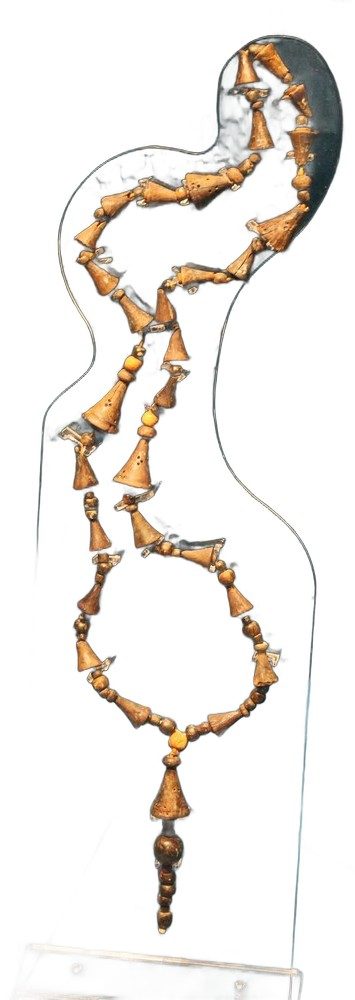
Rosary
Corone e rosario
- Known today as
- Strings of prayer beads.
- Kind
- Sacramental, in 4 older authorities
- Earliest authority here
- The Desert Fathers
- In the Canale glossary
- On the Manner of Discerning and Healing the Bewitched, Appendix A: Treatise Two: Blessed Objects and Materials
Revised October 1, 2026: Tradition, lore, modern assessment, and sources extended. An authority added from a text read in full. Version 1, first published September 25, 2026.
Rosary: what did Canale use it for?
Carried or kept at home, that one “may be freed from every visible and invisible enemy” (Treatise Two).
Rosary: what does modern science say?
In universal Catholic use.
What Medicine Makes of It
- Amulets, Blessed Objects, and the Meaning ResponseWhy what cannot work sometimes works.
- Scruples and the BesiegedThe obsessio of the manuals, and obsessive-compulsive disorder.
- The Noonday DemonAcedia of the desert monks, and depression.
- The FlagellantsPain as devotion, and what pain does to the one who chooses it.
Rosary: what lore surrounds it?
The name is from rosarium, a rose garden, the prayers being a garland of roses laid at the feet of the Virgin, as the Latin sermon said. Blessed rosaries carry indulgences, and the beads were hung at the cradle, laid in the coffin, and clutched in the plague; a rosary of the sixteenth century was often of coral, itself an amulet. John Paul II added the five Luminous Mysteries in 2002.
Rosary: what did the older authorities say?
- The Desert Fathers
- Counted their prayers on knotted cords and pebbles in the fourth century, and the knotted prayer rope of the Orthodox East descends from them; the Latin West strung beads for the hundred and fifty psalms, and then for the Paternosters that the unlettered said in their place.
- Saint Dominic
- Received the rosary from the Virgin, in the tradition of his order, about 1208; the historians find no record of it before Alanus de Rupe, the Breton Dominican who founded the first Confraternities of the Rosary about 1470 and gave the devotion its form of fifteen mysteries.
- Pius V
- A Dominican himself, fixed the rosary in its present shape in 1569, and credited the victory of Lepanto in 1571 to it, instituting the feast of Our Lady of Victory, now Our Lady of the Rosary, on 7 October.
- The Catholic Encyclopedia
- The Catholic Encyclopedia sets out the Breviary's claim that Our Lady instructed St. Dominic “to preach the Rosary among the people as an antidote to heresy and sin,” and then the evidence against it: in all the Dominican writings “between 1220 and 1450 … no single verifiable passage has yet been produced which speaks of the Rosary as instituted by St. Dominic,” and the tradition converges on “the preaching of the Dominican Alan de Rupe about the years 1470-75,” a man “full of delusions” who “based his revelations on the imaginary testimony of writers that never existed.” Prayer-beads were called paternosters, and the makers, “paternosterers,” formed guilds by the thirteenth century; “Paternoster Row in London still preserves the memory of the street.” Beads that had touched a saint's relics “were often piously believed to be the instruments of miraculous power and healing virtue.”
Sources
- Winston-Allen, A. (1997). Stories of the Rose: The Making of the Rosary in the Middle Ages. University Park: Pennsylvania State University Press. Verified against its record · doi:10.33137/confrat.v8i2.13387
- The Catholic Encyclopedia (New York, 1907–1914), “Rosary, The.” newadvent.org/cathen/13184b.htm Standard reference work
- The Catholic Encyclopedia (New York, 1907–1914), “Beads, Use of, at Prayers.” newadvent.org/cathen/02361c.htm Standard reference work
Verification
- Checked
- October 1, 2026
- Passes
- Every dated or regulatory claim checked by category across the database
- Each quotation from the older authorities checked word for word against the text, read in full
- Sources
- 3 cited: 1 verified against its record, 2 standard reference work.
- Corrections
- None were needed.
What was checked, how, and what was found is set out on the Verification page. A checked source is one whose record was found; it does not make the entry medical advice.
Cite This Entry
Version 1 · first published September 25, 2026 · last revised October 1, 2026
- Chicago
“Rosary.” In Materia Medica, edited by B. C. P. Statema. Version 1. The Thinking Press, 2026–. Last modified October 1, 2026. https://thethinkingpress.org/materia-medica/rosary.
- MLA
“Rosary.” Materia Medica, edited by B. C. P. Statema, version 1, The Thinking Press, 1 Oct. 2026, thethinkingpress.org/materia-medica/rosary. Accessed 8 Oct. 2026.
- APA
Rosary. (2026, October 1). In B. C. P. Statema (Ed.), Materia medica (Version 1). The Thinking Press. Retrieved October 8, 2026, from https://thethinkingpress.org/materia-medica/rosary
Club members keep entries on a shelf with private notes, print the plates as cards, and receive an entry by email each week. Create a free account before January 1, 2027 and all of it is yours for good. About the Club
See Also
Also in The Catholic Encyclopedia
The SATOR square in The Catholic Encyclopedia · The Roman Ritual in The Catholic Encyclopedia · Scapular in The Catholic Encyclopedia · The prologue of John in The Catholic Encyclopedia · everything The Catholic Encyclopedia names →
Nearby in the alphabet
Rose · Roquefort mould (The blue mould of blue cheeses) · Rosemary (Salvia rosmarinus (formerly Rosmarinus officinalis)) · Rosemary rice water (A rinse for the hair and the skin made in the kitchen) · Rocket (salad rocket) · Round birthwort (Aristolochia rotunda) · Rhubarb (Rheum officinale and R)
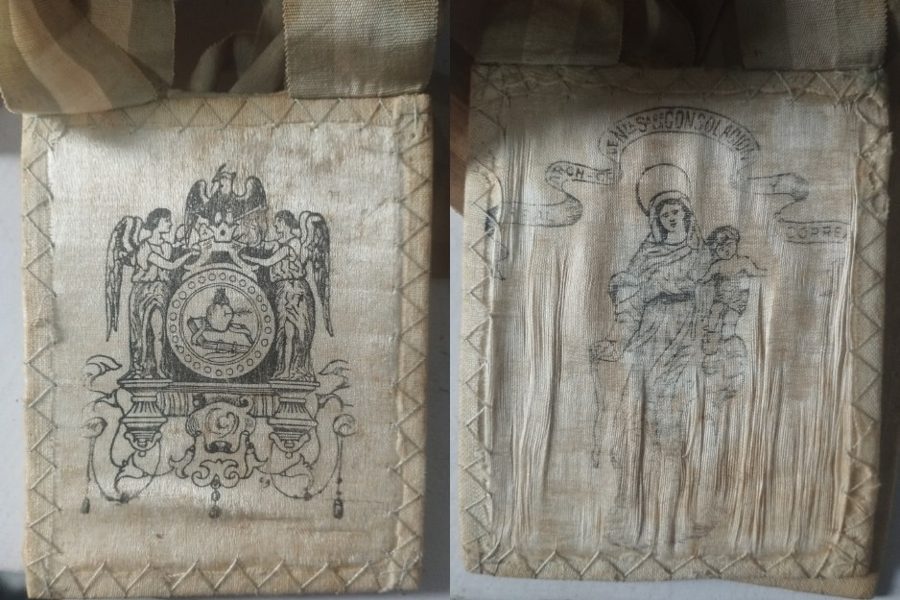
Historical description, not medical advice.