
Blessed bread
Pane benedetto
- Known today as
- Bread blessed by a priest, distinct from the Eucharist.
- Kind
- Sacramental, in 1 older authority
- Earliest authority here
- The Catholic Encyclopedia (New York, 1907–1914)
- In the Canale glossary
- On the Manner of Discerning and Healing the Bewitched, Appendix A: Treatise Two: Blessed Objects and Materials
Revised October 1, 2026: An authority added from a text read in full. Version 1, first published September 25, 2026.
Blessed bread: what did Canale use it for?
For the healing of the sick, with examples from the saints (notes LXVII–LXIX); taken each morning by the sick after three Our Fathers; blessed on St. Agatha’s day against fire (Treatise Two).
Blessed bread: what does modern science say?
St. Agatha’s bread is still blessed on 5 February in parts of Switzerland and Italy, and the old Ritual also gives a blessing of bread for St. Blaise.
What Medicine Makes of It
- Fasting, Vigil, and VisionWhat hunger and sleeplessness do to the senses.
- Amulets, Blessed Objects, and the Meaning ResponseWhy what cannot work sometimes works.
- Scruples and the BesiegedThe obsessio of the manuals, and obsessive-compulsive disorder.
- The OrdealThe hot iron, the swimming of witches, and the lie detector.
Blessed bread: what did the older authorities say?
- The Catholic Encyclopedia
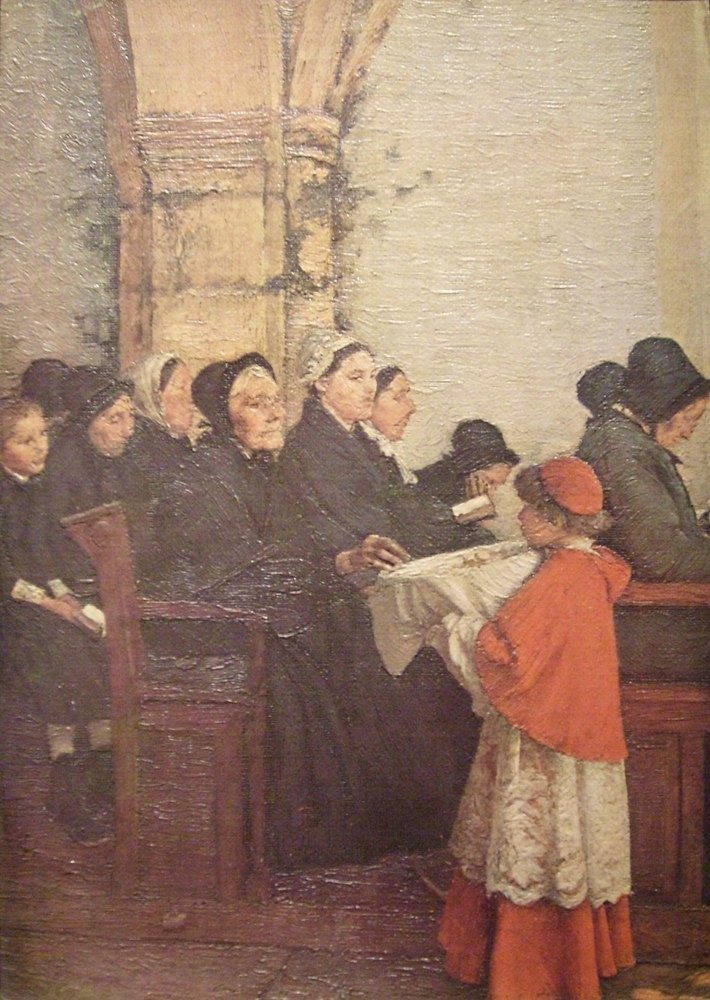
- The Catholic Encyclopedia distinguishes the eulogia, bread “offered at the Offertory of the Mass but not consecrated,” sent by bishops as “a pledge of communion of faith,” from the later pain bénit, “common bread which receives a special benediction,” for which “in many places it is the custom for each family in turn to present the bread on Sundays and feast days.” The Church prays “that those who eat it may receive health both of soul and body,” yet “in some instances the pain bénit was used not only with superstitious intent, and its virtues exaggerated beyond measure, but also for profane purposes.” In Quebec the families “vied with one another in presenting as rich and fine a pain bénit as possible, until finally the bishops, seeing that it entailed too much expense upon the poor circumstances, prohibited it.”
Sources
- [36] Elisa (2024). I seni e il pane di Sant’Agata: a Castelvecchio come da tradizione. ilGerme, 2 February 2024. Book, not indexed
- [73] Kulinarisches Erbe der Schweiz / Patrimoine culinaire suisse. Agathabrot. patrimoineculinaire.ch. Book, not indexed
- [120] Weller, P. T. (trans.) (1964). The Roman Ritual, Part XI: Blessings and Other Sacramentals. EWTN Library, ewtn.com. Primary text
- The Catholic Encyclopedia (New York, 1907–1914), “Bread, Liturgical Use of.” newadvent.org/cathen/02749a.htm Standard reference work
Verification
- Checked
- October 1, 2026
- Passes
- Every dated or regulatory claim checked by category across the database
- Each quotation from the older authorities checked word for word against the text, read in full
- Sources
- 4 cited: 1 primary text, 1 standard reference work, 2 book, not indexed.
- Corrections
- None were needed.
What was checked, how, and what was found is set out on the Verification page. A checked source is one whose record was found; it does not make the entry medical advice.
Cite This Entry
Version 1 · first published September 25, 2026 · last revised October 1, 2026
- Chicago
“Blessed bread.” In Materia Medica, edited by B. C. P. Statema. Version 1. The Thinking Press, 2026–. Last modified October 1, 2026. https://thethinkingpress.org/materia-medica/blessed-bread.
- MLA
“Blessed bread.” Materia Medica, edited by B. C. P. Statema, version 1, The Thinking Press, 1 Oct. 2026, thethinkingpress.org/materia-medica/blessed-bread. Accessed 8 Oct. 2026.
- APA
Blessed bread. (2026, October 1). In B. C. P. Statema (Ed.), Materia medica (Version 1). The Thinking Press. Retrieved October 8, 2026, from https://thethinkingpress.org/materia-medica/blessed-bread
Club members keep entries on a shelf with private notes, print the plates as cards, and receive an entry by email each week. Create a free account before January 1, 2027 and all of it is yours for good. About the Club
See Also
Also in The Catholic Encyclopedia
Blessed candles in The Catholic Encyclopedia · Blessed ashes in The Catholic Encyclopedia · Blessed paper in The Catholic Encyclopedia · Bells in The Catholic Encyclopedia · everything The Catholic Encyclopedia names →
Nearby in the alphabet
Blessed herbs (especially on the feast of the Assumption (15 August)) · Bladderwrack (a brown seaweed of rocky shores, buoyed by paired air bladders) · Blessed oil · Blackthorn (Prunus spinosa) · Black walnut


Historical description, not medical advice.