
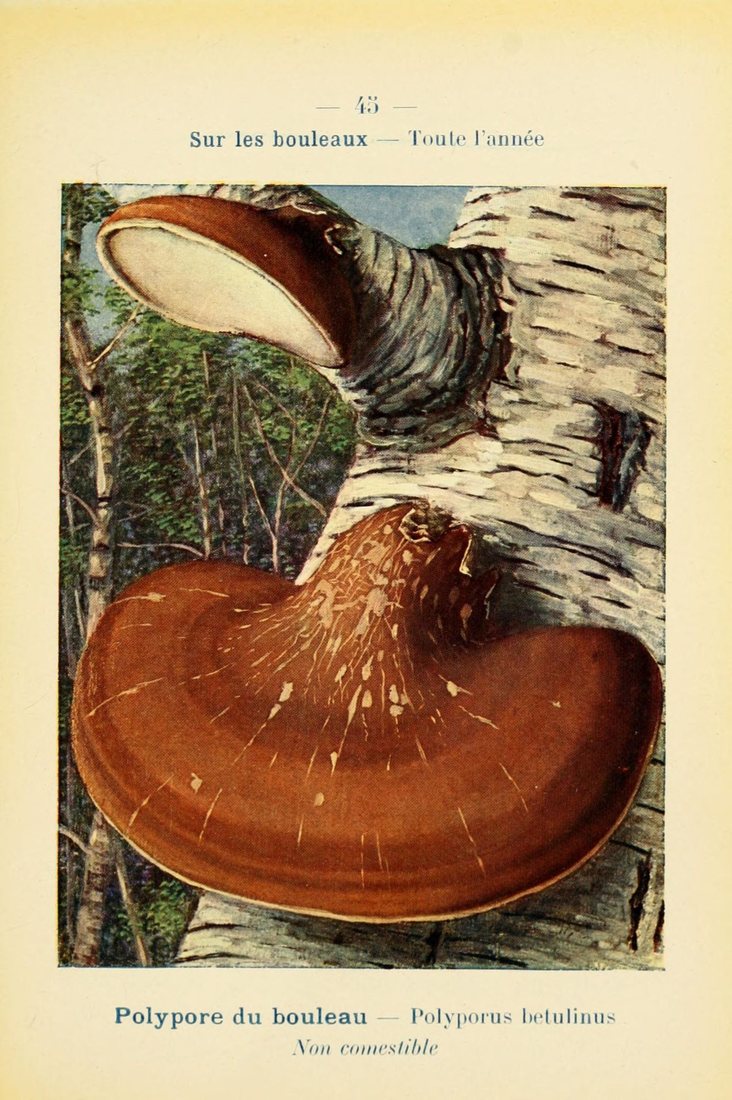
Birch polypore
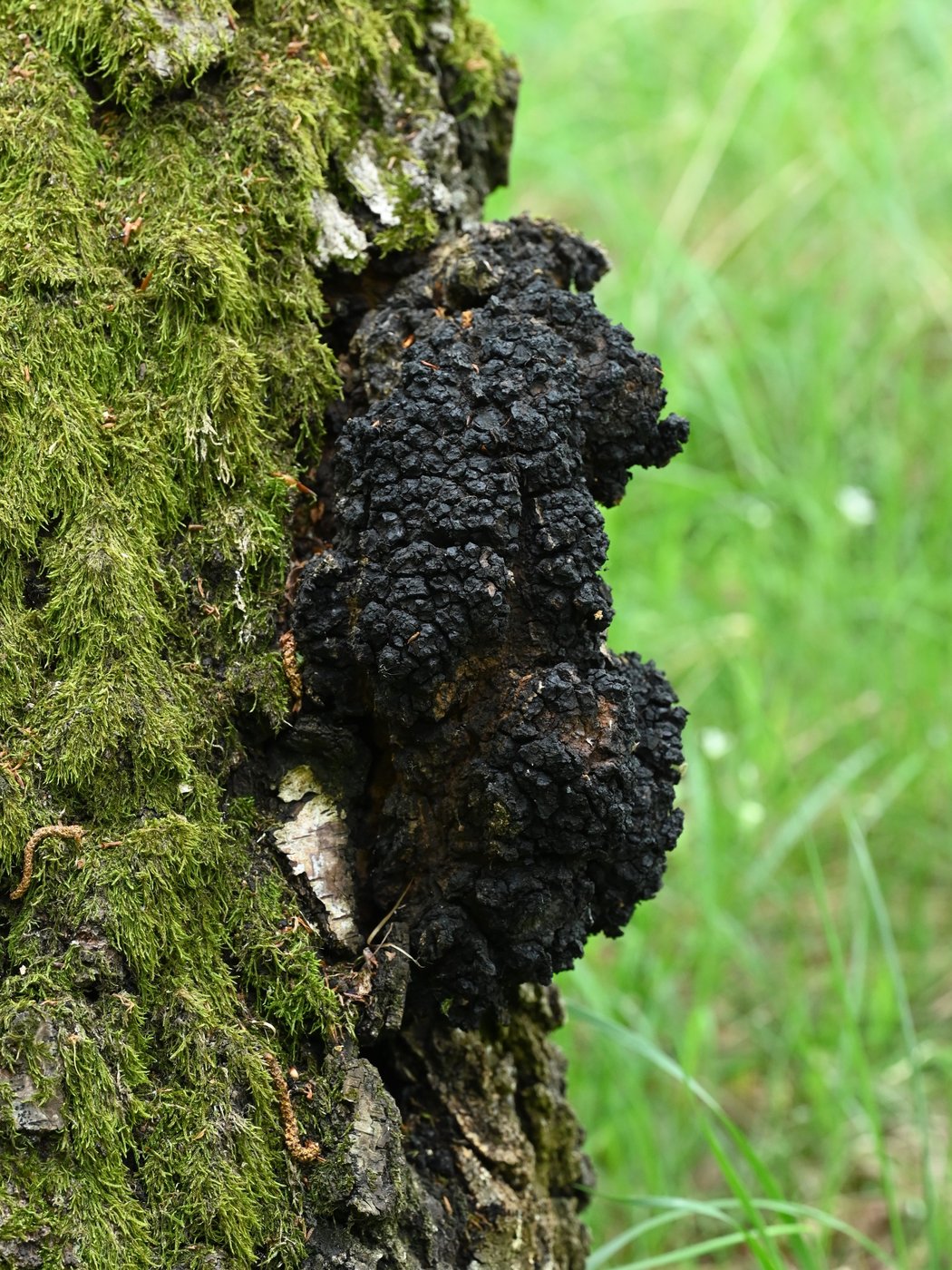
Fomitopsis betulina; razor-strop fungus
- Known today as
- A white bracket of dead birch.
- Kind
- Fungus
- Constituents
- polyporenic acids, piptamine, betulinic acid, and 1 more
- In other databases
- GBIF search · Wikidata search
Revised October 3, 2026: Checked against its sources, each read in full, in part, or in its abstract. Version 1, first published September 25, 2026.
Birch polypore: what was it used for?
Used to strop razors, and as a dressing for wounds.
Birch polypore: what does modern science say?
Its compounds are antibacterial and act against some parasites in the laboratory.
Pharmacognosy & Toxicology
- Constituents
- polyporenic acidslanostane triterpenes
- piptaminean antibiotic
- betulinic acid ChEMBLa triterpene
- beta-glucans
- Mechanism
- Its triterpenes suppressed inflammation in mice, and piptamine acts against bacteria and yeasts in the laboratory; fresh pieces were laid on wounds as antiseptic dressings in folk medicine. Ötzi carried two pieces, perhaps for the whipworm he had; its agaric acid is poisonous to that worm.
- Toxic dose
- Considered inedible, except perhaps when young.
- Standing
- A folk remedy, especially in Russia, the Baltic countries, Hungary and Romania; now studied for its antibacterial, anticancer and other activities.
- Pleszczyńska, M., et al. (2017). “Fomitopsis betulina (formerly Piptoporus betulinus): the Iceman’s polypore fungus with modern biotechnological potential.” World Journal of Microbiology and Biotechnology 33. Read in full · the text read
The abstract of each source, beneath its citation. For Club members. About the Club or sign in.
Constituent names open the compound’s record at PubChem, and “ChEMBL” beside a name opens its record at ChEMBL, the European Bioinformatics Institute’s database of bioactive molecules. Where a mechanism line was checked against ChEMBL (ChEMBL 37, read 1 October 2026), the check is shown with the measured value and its source paper, or says plainly that nothing has been measured. Doses are as the references give them, for description only; this is not medical advice. Each source carries the result of its check against Crossref, PubMed, or the authority’s page: see Verification.
Birch polypore: what lore surrounds it?
Ötzi carried two pieces of it with leather strings through them. Because he had whipworm, some have proposed he carried it as a medicine.
In Their Own Words
Cooke suggests drying a large tough Polyporus and using it as a razor strop, and adds that P. betulinus, found growing on birch trees, serves equally well.
“…and employ it as a razor strop. A person who has had one in use for many years, says that it is far superior to the majority of those offered for sale. Another Polyporus (P. betulinus), without a stem, and not uncommonly found growing on birch-trees, is equally available for the same purpose.”
M. C. Cooke, A Plain and Easy Account of British Fungi, Polyporus (on razor strops). London: Robert Hardwicke, 192, Piccadilly, 1862 (Internet Archive OCR text). The text, read in part
Cooke's Handbook records the birch Polyporus on birch trees, its cap four to six inches across, smooth, pale reddish-brown when mature, with very thick white flesh.
“On birch trees. Pileus 4-6 in. across, smooth, pale reddish-brown when mature, often mottled, roundish, or somewhat reniform; flesh white, very thick”
M. C. Cooke, M.A., Handbook of British Fungi, with full descriptions of all the species, and illustrations of the genera, no. 772, Polyporus betulinus, 'Birch Polyporus'. London and New York: Macmillan and Co., 1871 (Internet Archive OCR text). The text, read in part
Each passage is quoted from the text named, which the press fetched and read, and was checked word for word against a fresh copy of it; the link opens that copy. Passages are given as printed, without the editors’ footnote numbers, and with words broken across lines joined.
Sources
- Wikipedia, “Fomitopsis betulina,” en.wikipedia.org (read 2 October 2026). Read in full · the text read
- Wikipedia, “Ötzi,” en.wikipedia.org (read 2 October 2026). Read in full · the text read
Verification
- Checked
- October 1, 2026, and October 3, 2026
- Passes
- Every sentence read against its sources, in the pass over the remaining 343 entries
- The Standing line checked against the authority it names (EMA, WHO, FDA, CITES, Commission E)
- Every dated or regulatory claim checked by category across the database
- Every source read, in full, in part, or in its abstract, and every sentence checked against what was read (October 3, 2026)
- Sources
- 3 cited: 3 read in full. 1 with the abstract on file.
- Corrections
- None were needed.
What was checked, how, and what was found is set out on the Verification page. A checked source is one whose record was found; it does not make the entry medical advice.
Cite This Entry
Version 1 · first published September 25, 2026 · last revised October 3, 2026
- Chicago
“Birch polypore.” In Materia Medica, edited by B. C. P. Statema. Version 1. The Thinking Press, 2026–. Last modified October 3, 2026. https://thethinkingpress.org/materia-medica/birch-polypore.
- MLA
“Birch polypore.” Materia Medica, edited by B. C. P. Statema, version 1, The Thinking Press, 3 Oct. 2026, thethinkingpress.org/materia-medica/birch-polypore. Accessed 8 Oct. 2026.
- APA
Birch polypore. (2026, October 3). In B. C. P. Statema (Ed.), Materia medica (Version 1). The Thinking Press. Retrieved October 8, 2026, from https://thethinkingpress.org/materia-medica/birch-polypore
Club members keep entries on a shelf with private notes, print the plates as cards, and receive an entry by email each week. Create a free account before January 1, 2027 and all of it is yours for good. About the Club
See Also
Sharing betulinic acid, beta-glucans
Drawing on the same sources: Wikipedia
Brewer’s yeast · Aurum potabile · Brown roll-rim · the bibliography →
Nearby in the alphabet
Bistort (snakeweed) · Bezoar stone (A concretion formed in the stomach of goats and other animals) · Bitter aloes (A) · Betony (Betonica officinalis) · Black hellebore (Helleborus niger) · Benzoin (the resin of Styrax benzoin of Sumatra) · Black pepper (The dried fruit of Piper nigrum) · Ben-nut (Moringa oleifera (or M)
Historical description, not medical advice.