
The Universal Antidote
Bezoar, unicorn, and theriac against every poison, and what replaced them.
In the Texts
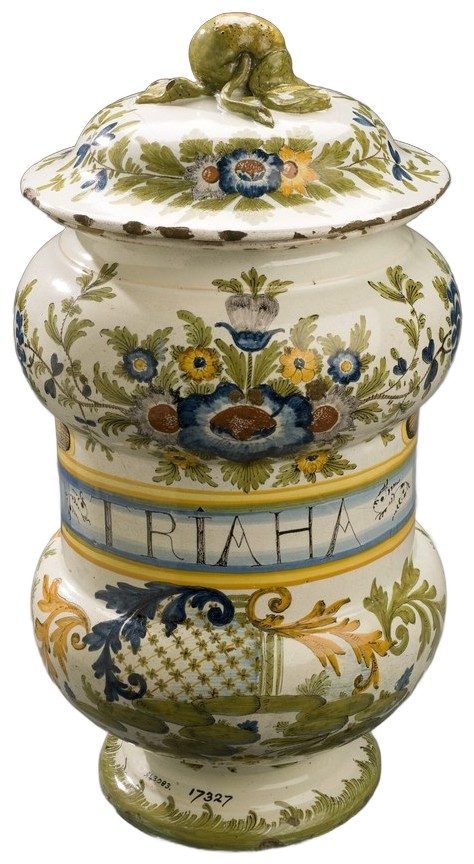
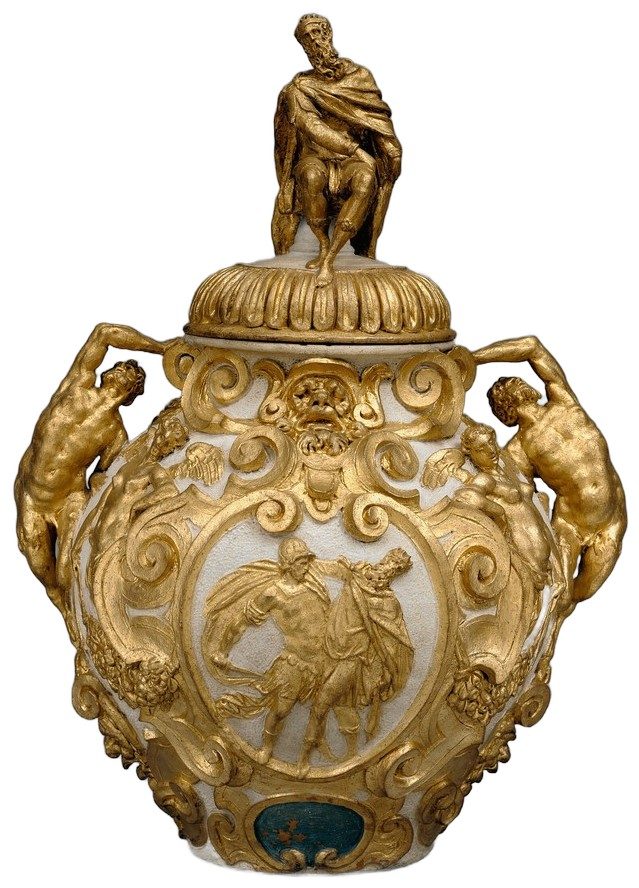
The poisoner was the demonologist’s neighbour, and the Materia Medica carries the counter-poisons: the bezoar from the goat’s stomach, the unicorn’s horn, the toadstone that warmed near poison, the sealed earth, and the two great compounds, theriac and mithridate, taken daily by princes. Canale prescribes theriac a dram a day for a month.
What Medicine Makes of It
Paré tested the bezoar in 1567 on a condemned cook and watched him die, the first negative trial in toxicology; and yet Arrhenius and Benson (1981) found a bezoar does bind arsenic, the poisoner’s poison, in the laboratory. Heberden (1745) counted theriac’s ingredients and had it dropped; the opium in it was the one drug that acted. The universal antidote of the first-aid books was shown inert in the 1960s; activated charcoal is the one broad antidote, and the specific antidotes, one for each poison, are the modern universal medicine.
The Evidence
- Paré’s trial of 1567, a condemned cook given mercuric chloride and a bezoar, who died in seven hours, is the first recorded controlled test of an antidote and the first negative result in toxicology; the king burned his bezoar.
- Arrhenius and Benson showed in the laboratory in the late 1960s that a bezoar removes arsenic from solution, the brushite exchanging phosphate for arsenate and the hair’s sulfur binding arsenite: against the one poison most used by the Renaissance poisoner the stone was not wholly inert.
- Heberden’s Antitheriaka (1745) counted theriac’s ingredients, showed their actions cancelled or did nothing, and had it dropped from the London Pharmacopoeia the next year; Watson (1966) and Griffin (2004) trace the compound’s fall.
- The “universal antidote” of twentieth-century first-aid books, burnt toast, tannic acid, and magnesia, was shown inert in the 1960s and dropped; activated charcoal, which adsorbs most organic poisons in the gut within an hour, is the one broad antidote that works, and the specific antidotes (naloxone, hydroxocobalamin, atropine, digoxin antibody, chelators) are the modern universal medicine, one for each poison.
- Mithridates’ daily small doses, the one part of the legend with pharmacology, is mithridatism: tolerance develops to opioids and some plant toxins and not at all to cyanide, arsenic, or the metals.
Where They Part
The Renaissance wanted one remedy for every poison and had none; medicine has many remedies, each for one poison, and a charcoal that does for most. The bezoar’s arsenic is the detail that keeps the reading honest.
In the Materia Medica
Sources
- Paré, A. (1575). Les Oeuvres, “Des venins”; trans. Johnson (1634).
- Heberden, W. (1745). Antitheriaka.
- Griffin, J. P. (2004). “Venetian treacle and the foundation of medicines regulation.” British Journal of Clinical Pharmacology 58.
- Goldfrank’s Toxicologic Emergencies, 11th ed. (2019), “Principles of managing the acutely poisoned patient.”
Historical and interpretive; not medical advice.