
The Falling Sickness
Epilepsy, the demon that throws the child into the fire.
In the Texts
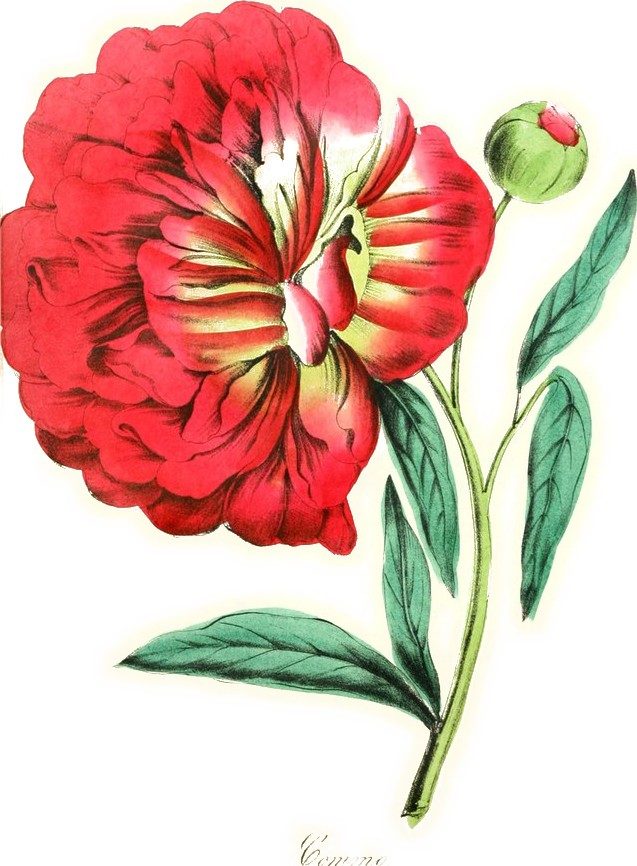
The boy in Mark 9, thrown down foaming and rigid, into fire and water, from childhood, is the possession the exorcists cite first; Menghi lists the falling sickness among the signs of the demon and among the diseases that counterfeit him, and Canale, following the physicians, allows that it is often natural. The remedies of the Materia Medica for it are the peony hung at the neck, the mistletoe, the cramp-rings, and the skull.
What Medicine Makes of It
Hippocrates said it was no more sacred than any other disease, and the two accounts ran side by side for two thousand years (Temkin). A seizure is a storm of synchronous discharge in the cortex; the tonic-clonic form is what Mark describes, and the temporal-lobe form, with its auras of presence, fear, bliss, and déjà vu, and its interictal religiosity (Waxman and Geschwind, 1975), is the one that was read as possession or as grace. Bromide (1857) and phenobarbital (1912) were the first drugs; the peony has no action.
The Evidence
- Hippocrates’ On the Sacred Disease (c. 400 BC) says of epilepsy that it is “no more divine than any other,” has its cause in the brain, and that those who call it sacred are charlatans; Temkin (1945, 1971) traces the two accounts, the natural and the demonic, running side by side for two thousand years.
- The gospel case (Mark 9:17–27), with its foaming, rigidity, falling into fire and water, and the father’s “from childhood,” is read by neurologists as a description of tonic-clonic seizures beginning in childhood; the evangelist’s account is clinically precise.
- Waxman and Geschwind (1975) described heightened religiosity, hypergraphia, and a deepening of emotion between seizures in some patients with temporal-lobe epilepsy, and Dewhurst and Beard (1970) recorded sudden religious conversions in six such patients; the ecstatic aura of Dostoevsky is the literary case.
- Devinsky and Lai (2008) reviewed the ictal religious experiences: in a minority of temporal-lobe patients the seizure itself brings a sense of presence, bliss, or revelation, which the patient and his community may read as possession or grace.
- Peony root, hung at the neck against epilepsy since Galen, has no demonstrated anticonvulsant action in people; the first effective drug was bromide (Locock, 1857), the next phenobarbital (Hauptmann, 1912).
Where They Part
The manuals had the description right and the mechanism wrong, and knew it was often natural; the one thing medicine adds is that it is always natural. The religious experience of the temporal-lobe seizure is the hard case, since it is both a symptom and, to the patient, a revelation.
In the Materia Medica
Sources
- Temkin, O. (1971). The Falling Sickness: A History of Epilepsy from the Greeks to the Beginnings of Modern Neurology, 2nd ed. Johns Hopkins.
- Waxman, S. G., and Geschwind, N. (1975). “The interictal behavior syndrome of temporal lobe epilepsy.” Archives of General Psychiatry 32.
- Devinsky, O., and Lai, G. (2008). “Spirituality and religion in epilepsy.” Epilepsy and Behavior 12.
- Hippocrates. On the Sacred Disease, trans. Jones (Loeb, 1923).
Historical and interpretive; not medical advice.